


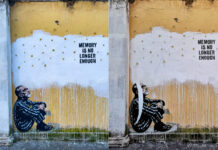












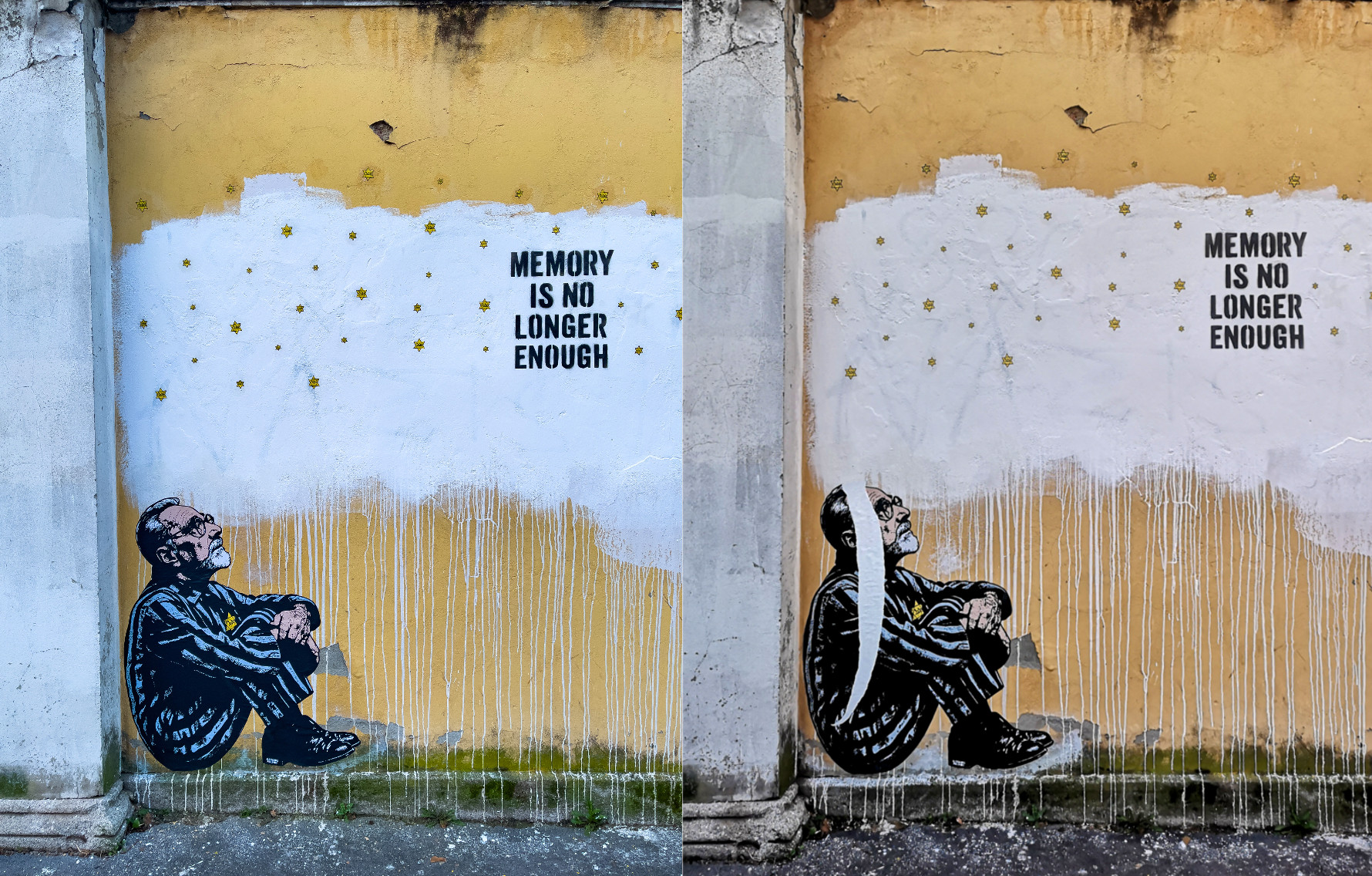

Just a few days after it appeared, the mural dedicated to Primo Levi, created by contemporary artist aleXsandro Palombo for Holocaust Remembrance Day, was vandalized. The artwork, entitled “Memory Is No Longer Enough,” is visible on the wall of the Montello Barracks in Milan and depicts Levi and Anne Frank sitting on the ground in the uniforms of Auschwitz deportees, their gaze turned toward a sky of yellow stars, the same stars Jews were forced to sew onto their clothing. This firmament, transformed by the artist into a sky of memory, evokes the six million victims of the Nazi genocide.
Primo Levi’s face was defaced, an act of violence that symbolically strikes at his testimony and the civic value it represents.
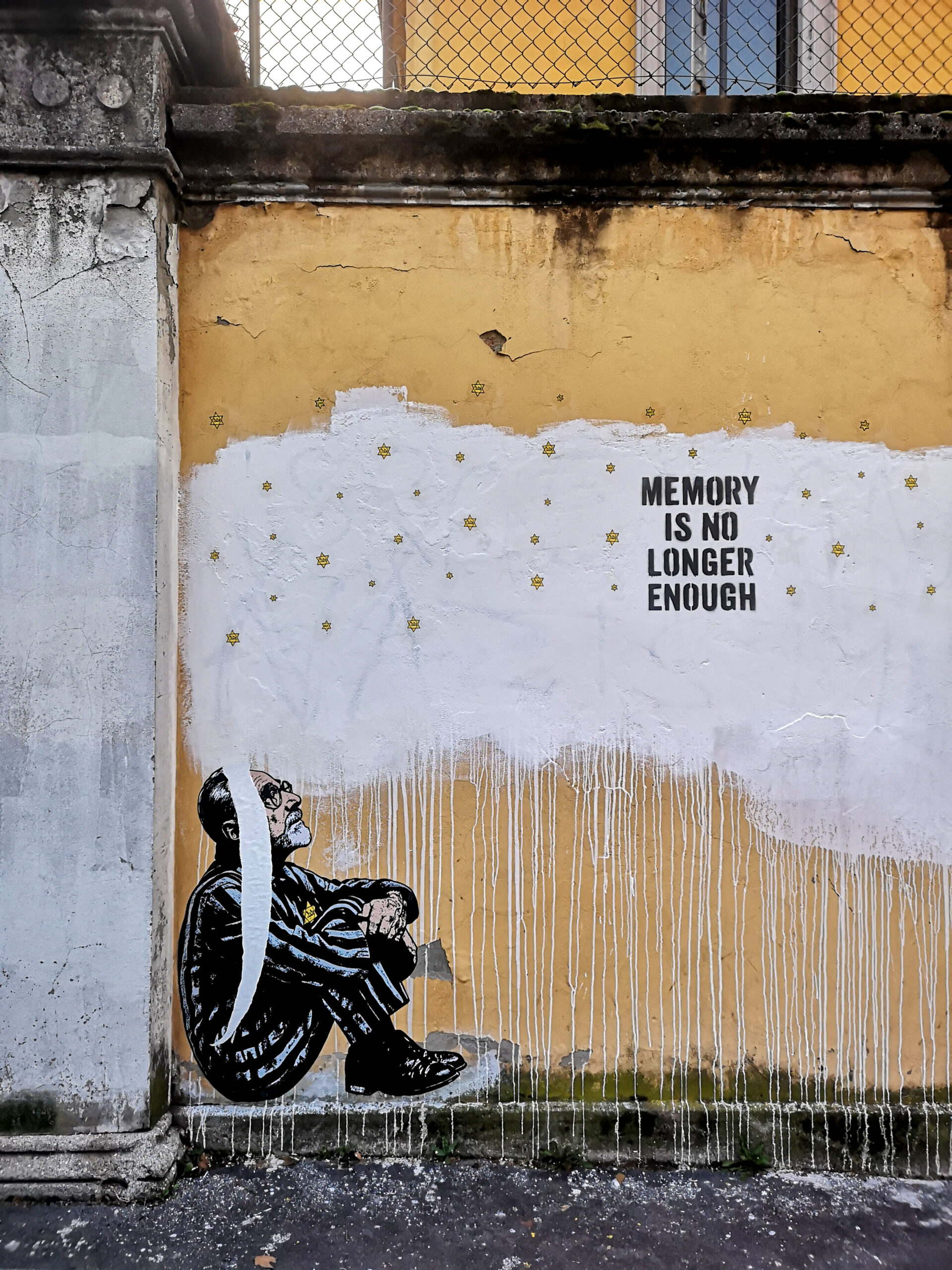
The new mural had been created precisely on the wall where, in 2025, portraits of Liliana Segre, Sami Modiano, and Edith Bruck had been defaced. On that occasion, swastikas had appeared, the Stars of David had been erased, and a large inscription reading “Israelis Nazis” covered the wall. The artist had recently intervened by cleaning the surface, removing the anti-Jewish insult, and creating a new composition with the portrait of Primo Levi, transforming the previous defacement into an act of public denunciation. In 2025, the Shoah Museum of Rome acquired for its permanent art collection several important works by aleXsandro Palombo dedicated to Holocaust witnesses Liliana Segre, Sami Modiano, and Edith Bruck, now displayed in front of the Portico d’Ottavia and incorporated into its public memory itinerary.
His interventions dedicated to the memory of the Holocaust draw public attention to the fragility of remembrance and the responsibility to safeguard it. Through the language of art, Palombo transforms public space into a place of collective awareness, reaffirming the value of testimony and the duty not to look away.
aleXsandro Palombo, a contemporary pop artist and activist, elusive and reserved, is internationally recognized for his reflective and irreverent works that focus on pop culture, society, inequalities, inclusion and diversity, ethics, and human rights.