





















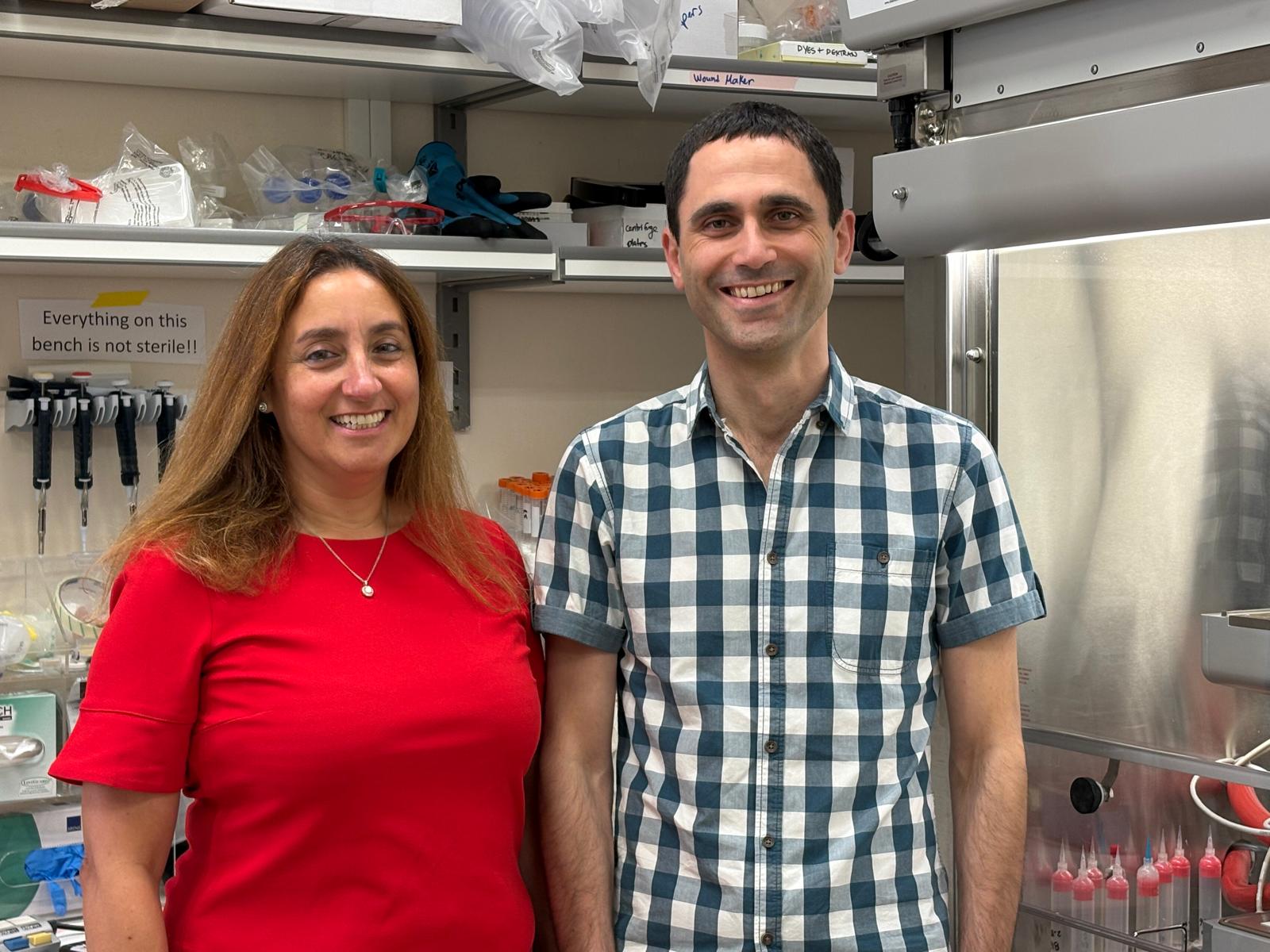

Loss of a chromosome 17 segment disables the p53 gene, helping breast cancer cells survive and grow in the brain’s environment.
Researchers at Tel Aviv University have identified a mechanism that enables breast cancer to metastasize to the brain, a discovery that could lead to new treatments for the often-fatal condition.
The international study, published Monday in Nature Genetics, found that when breast cancer cells lose part of chromosome 17, they become far more likely to spread to the brain. This alteration often eliminates or inactivates the p53 gene, often called “the guardian of the genome,” which normally regulates cell growth.
Cancer cells, in green, interact with red astrocytes in the brain to use building blocks the astrocytes secrete; cell nuclei appear in blue. Credit: TAU.
Without functional p53, cancer cells produce more fatty acids, allowing them to adapt and thrive in the brain’s unique environment, according to researchers Professors Uri Ben-David and Ronit Satchi-Fainaro.
The team identified a key enzyme, SCD1, involved in fatty acid production. Drugs that inhibit SCD1 significantly reduced brain metastases in mice and human tissue samples.
The findings may help doctors identify high-risk patients earlier and tailor treatment accordingly. Brain metastases have very limited effective treatment options and are among the deadliest cancer complications.
The study involved researchers from 14 laboratories across six countries.