


























Despite pummeling Iran, the leaders of the world’s two strongest air forces are fending off criticism from political opponents during a 14-day ceasefire. Results on the battlefield appear to be taking a backseat to political machinations.
The analysis of wars is changing in the 24-hour media and social media cycle. Tweets and press briefings can be more powerful weapons than missiles. How a particular post lands and reverberates can have just as powerful an influence on a war’s outcome.
In past wars, world leaders were not bombing via social media. This is particularly true of terror sponsors and their proxies. Public statements affect military posture. Wars—and more importantly, the perception of wars—are judged mercilessly on a minute-to-minute basis by commentators without military experience and with limited understanding of how diplomacy actually works.
Pundits can claim that Iran and its terror proxies have won a war, and millions around the world can buy into a warped narrative, even when it has no grounding in reality.
Immense war gains
Even if the military operation ends with the current ceasefire, the gains have been immense.
Together, the air forces of the United States and Israel struck thousands of targets with precision. The air forces neutralized Iran’s known and covert nuclear sites, as well as its ballistic missile production facilities—the two prevailing objectives of the war. The dual existential threats of a nuclear weapon and tens of thousands of ballistic missiles capable of overwhelming Israel’s multilayer missile defense appear to have been eliminated.
The United States reports that Iran’s ballistic missile and drone capabilities have been degraded by 90%.
Additionally, the IDF reports that 70% of Iran’s ballistic missile launchers have been destroyed. Missiles cannot be fired without launchers, which are significantly more complex to produce than the missiles themselves.
‘Capital-V military victory’
U.S. Secretary of Defense Pete Hegseth said this week that “‘Operation Epic Fury’ was a historic and overwhelming victory on the battlefield, a capital-V military victory,” adding that it “decimated Iran’s military and rendered it combat-ineffective for years to come.”
U.S. President Donald Trump said the war had been a “total and complete victory. 100%. No question about it.”
British broadcaster Piers Morgan responded to Hegseth’s assessment by claiming that “America/Israel may have won the war on the battlefield, but Iran won the war on the waterways, paralyzed the world’s energy supplies, and caused huge global economic damage. That’s why President Trump has moved to do a deal. It’s not a ‘historic victory’ or anything like it.”
Other commentators have made similar claims.
Trump responded on Truth Social that “the Fake News Media has lost total credibility, not that they had any to begin with. Because of their massive Trump Derangement Syndrome (Sometimes referred to as TDS!), they love saying that Iran is ‘winning’ when, in fact, everyone knows that they are LOSING, and LOSING BIG!”
He cited the destruction of Iranian naval and air capabilities, air-defense systems, radar and missile and drone factories, as well as the loss of senior leadership figures.
‘Battle is not yet over’
Israeli Prime Minister Benjamin Netanyahu has emphasized the war’s gains to the Israeli public, while stopping short of declaring the “total victory” he has previously pledged, saying this week that “the battle is not yet over.”
Netanyahu said the war had produced “massive achievements,” calling it a “historic change,” adding that Israel and the United States “crushed the nuclear program. We crushed the missiles, and we crushed the regime.”
Many Israelis are wary that a ceasefire can hold beyond the stated two-week timeframe—even as parents welcomed the return of children to school after a six-week interruption.
Within Israel, longtime opponents of Netanyahu have been quick to describe the ceasefire as a defeat for the allies.
Opposition leader Yair Lapid called the ceasefire a “military success turned into a diplomatic disaster.” Lapid, while serving as caretaker prime minister in October 2022, transferred a strategic natural-gas area in disputed waters to Lebanon in an effort to avert conflict with Hezbollah.
A senior defense correspondent for Israel’s Channel 13 said Netanyahu’s claims that Iran is weaker than ever are “half-truths,” alleging that “Iran came out stronger from this war” and has emerged as a regional power.
Israel is expected to hold elections before the end of the year, and many of Netanyahu’s longtime critics remain among his most vocal detractors.
Israel’s major diplomatic achievement
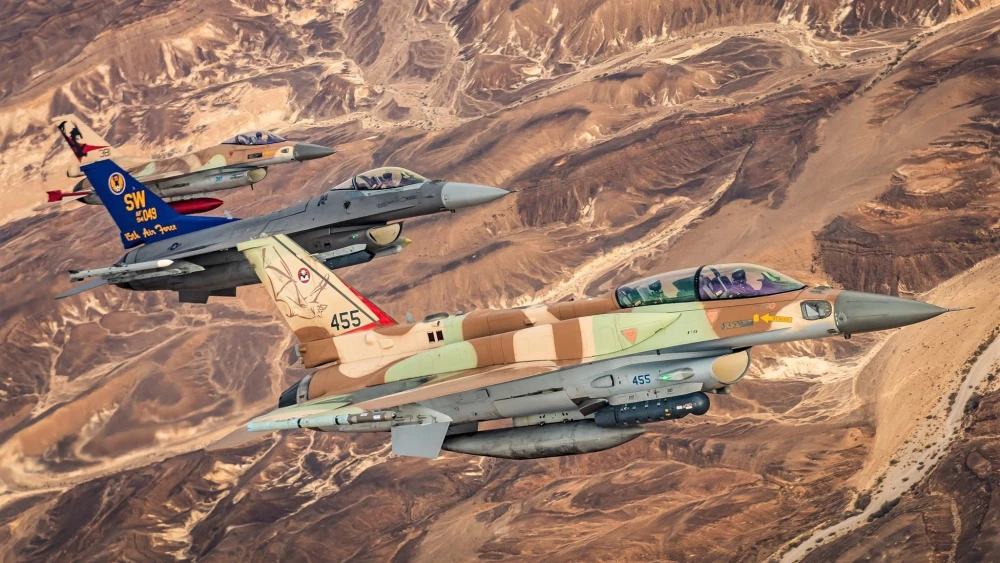
Flying side-by-side for six weeks with the U.S. Air Force—the most powerful in the world by orders of magnitude—against a common enemy represents a major diplomatic achievement for Israel. It reflects decades of efforts by Netanyahu to strengthen U.S.-Israel ties and highlight the dangers posed by a nuclear Iran.
Israel could not have achieved the same level of destruction against Iranian targets in such a short period without the United States. In addition to regional bases, aircraft carriers, naval strike vessels and fighter aircraft, the United States deployed dozens of aerial refueling planes.
Israel, by contrast, has only a limited refueling fleet. Throughout the campaign, Israeli aircraft repeatedly connected with American refueling tankers, enabling extended flight operations. Without that capability, Israel would have conducted far fewer sorties and likely faced sustained ballistic missile attacks for a longer period.
Israeli resilience
The resilience of the Israeli home front remains a key component of national defense and a major factor in determining the duration of military campaigns. Israel’s ability to sustain prolonged conflict is closely linked to the civilian population’s readiness to move in and out of bomb shelters. Israelis endured sustained ballistic missile attacks from Iran, but many parents welcomed the ceasefire announcement that allowed schools to reopen after six weeks.
Operating alongside the United States significantly shortened the campaign’s time frame. Any Israeli prime minister would have chosen to act in coordination with Washington—even if aware from the outset that the United States might limit its involvement to several weeks and conclude operations before Iran formally surrendered.
Critics who fault Netanyahu for the ceasefire overlook the significance of the U.S. decision to participate militarily alongside Israel.
Claims that Israel was blindsided by Trump’s ceasefire appear inconsistent with the unprecedented level of military and diplomatic coordination between the allies. Both leaders indicated earlier in the conflict that they were in frequent contact.
Israel as a top-flight ally
Joint operations with the United States have had benefits extending beyond the immediate theater. U.S. officials observed firsthand the capabilities of the Israeli Air Force. Not a single Israeli aircraft or pilot was lost during six weeks of combat. American officials have also taken note of Israeli upgrades to U.S.-made systems, including software enhancements and modifications to the F-35i “Adir” fighter jet that extend operational range.
Israel also demonstrated its value as a major intelligence partner. U.S. forces relied extensively on Israeli intelligence during the campaign. Israeli intelligence capabilities in the Middle East are widely considered highly advanced.
Hegseth has repeatedly praised Israel’s performance as an ally, particularly notable given Israel’s relatively small size compared to the United States. With a population of about 10 million, Israel is roughly comparable in size to the U.S. state of New Jersey.
Former Israeli Ambassador to the United States Ron Dermer has argued that Israel would emerge as one of America’s most important allies in the current decade—an assessment that recent events appear to reinforce.
Some observers attempt to evaluate U.S.-Israel relations primarily through the lens of political personalities. However, beneath political differences lies a deep military-intelligence partnership. Few U.S. allies could operate as effectively alongside American forces or contribute comparable intelligence capabilities.
‘Roaring Lion,’ not paper tiger
Beyond Washington, other countries are closely watching Israel’s military performance. Joint operations with the United States have strengthened Israel’s reputation as a regional power. Israel’s adversaries have observed that the Jewish state is a “Roaring Lion”—the name of Israel’s operation—rather than a paper tiger. Gulf states are likely to take note of Israel’s demonstrated willingness to defend regional security interests.
Israel’s military performance also contrasts with that of several European powers. Trump and Secretary of State Marco Rubio have voiced criticism of European countries, including the United Kingdom, France and Spain, even as discussions have emerged regarding the future of NATO and U.S. military basing in Europe.
At the same time, European countries—particularly Germany—are seeking to acquire or produce Israeli missile-defense systems that have demonstrated effectiveness in combat conditions. Even Spain, one of Israel’s more vocal critics, has reportedly obtained advanced Israeli defense technology through German partnerships.
The ceasefire may not hold
The war may not yet be over. Even if the ceasefire lasts beyond the initial 14-day period, renewed fighting remains possible.
Trump announced the temporary ceasefire to allow Iran an opportunity to negotiate following six weeks of sustained military pressure. Previous negotiations between Washington and Tehran have sometimes been followed by renewed military action when talks failed to produce an agreement.
In April 2024, Trump gave Iran 60 days to negotiate limits on its nuclear program. On the 61st day, the “12-Day War” began, including Israel’s “Operation Rising Lion” and the U.S. “Operation Midnight Hammer,” which targeted Iran’s nuclear facility at Fordow.
Earlier this year, Trump again set a short negotiation deadline. When talks broke down, “Operation Epic Fury” was launched.
Iran now faces another limited negotiating window.
Possible benefits of negotiations
Negotiations may provide additional strategic clarity. Washington is seeking to determine the extent of damage to Iran’s chain of command and whether the current leadership retains operational control. If Iran halts missile and drone attacks and allows maritime traffic to move freely through the Strait of Hormuz for an extended period, that could indicate the regime maintains centralized authority.
Negotiations may also reveal whether Iran’s current leadership is prepared to reconsider nuclear and missile ambitions. Netanyahu has previously argued that adversaries can either disarm voluntarily or be disarmed by force.
Shifting leverage
Netanyahu has often favored negotiating while adversaries remain under military pressure. Trump and Hegseth have said Iran sought a ceasefire following sustained losses. However, ceasefires can alter perceived leverage. Iranian leaders may interpret a pause as evidence that Washington also seeks to avoid continued conflict. Such calculations could prove risky if misjudged.
Public statements frequently differ from private diplomatic positions. It remains possible that Iran’s current leadership may adopt a more pragmatic posture than previous officials.
Even if agreements are reached, Middle East diplomacy has often proven fragile. Iran is a signatory to the Nuclear Non-Proliferation Treaty, yet concerns about its nuclear ambitions have persisted for years.
Opponents who never admit defeat
Israel and the United States are confronting adversaries whose ideological frameworks often emphasize martyrdom and resistance. In such strategic cultures, physical destruction does not necessarily translate into political surrender.
Hamas provides a recent example. Since the Oct. 7, 2023, attacks that triggered the Gaza war, Israel has destroyed large portions of Hamas’s infrastructure, including tunnel networks and weapons stockpiles. Hamas’s capacity to threaten Israel militarily has been significantly reduced, yet the group continues to claim victory.
If such conditions are defined as success by Iran and its regional partners, the strategic implications may be significant.
On the road to regime change?
For Israel, one of the broader objectives of the war has been to weaken or replace Iran’s leadership structure. Early strikes reportedly eliminated senior figures within the regime, including Supreme Leader Ayatollah Ali Khamenei and other key officials.
It remains unclear whether the remaining leadership structure can retain long-term stability. Even before “Operation Epic Fury,” Iran’s leadership faced domestic unrest and economic pressure. Some analysts argue that regime change cannot be achieved through air power alone, particularly without ground forces.
If political change occurs, it will likely be driven by internal Iranian dynamics. Earlier this year, widespread protests were met with force by the Islamic Revolutionary Guard Corps and Basij militia. During the air campaign, Israeli and U.S. officials, as well as Iranian opposition figures including Reza Pahlavi, urged demonstrators to avoid confrontation. Should the ceasefire hold, domestic protest activity could reemerge.
Arming the opposition
The Islamic Revolutionary Guard Corps maintains a significant coercive capacity inside Iran. Trump suggested last week that the United States attempted to provide weapons to Iranian opposition elements, possibly through Kurdish intermediaries, but that the weapons did not reach their intended recipients.
In a statement to reporters, Trump stated that America had sent “a lot of guns” that were “supposed to go to the people so they could fight back against these thugs.” He went on to accuse the transfer agents of not delivering the weapons to their intended destination. “The people that they sent them to kept them,” adding, “So I’m very upset with a certain group of people, and they’re going to pay a big price for that.”
Hopefully, the guns will soon find their intended destination. Should the regime fall in the months ahead, all of Israel’s goals would have been reached.